Giving birth vaginally can sometimes result in a perineal tear, which is a tear in the tissue between the vagina and anus. While this can sound intimidating, perineal tears are common and, in most cases, heal well with proper care and time.
If you’ve recently had a tear during childbirth, understanding what to expect can help make recovery feel less overwhelming.
What Happens After a Perineal Tear?
After delivery, your doctor or midwife will usually repair the tear with dissolvable stitches. These stitches generally dissolve on their own within a few weeks and do not need to be removed.
You may occasionally notice small pieces of stitch material on your sanitary pad or toilet paper. This is normal and usually nothing to worry about.
In the first few days after birth, it’s common to experience:
- Perineal soreness and tenderness
- Discomfort while sitting or walking
- Pain during urination
- Discomfort with bowel movements
Most women notice gradual improvement each day, with healing often occurring within 4–6 weeks, depending on the severity of the tear.
Tips for a Comfortable Recovery
1. Manage Pain and Swelling
Pain is often most noticeable in the early days after birth.
Some ways to manage discomfort include:
- Using pain relief medications recommended by your healthcare provider
- Applying cold packs to reduce swelling and soreness
- Using ice packs for 10–20 minutes at a time
- Placing a cloth between the ice pack and your skin to prevent irritation
2. Keep the Area Clean
Good hygiene helps reduce the risk of infection and supports healing.
Consider the following:
- Gently wash the area with warm water and mild soap
- Pat dry with a soft towel rather than rubbing
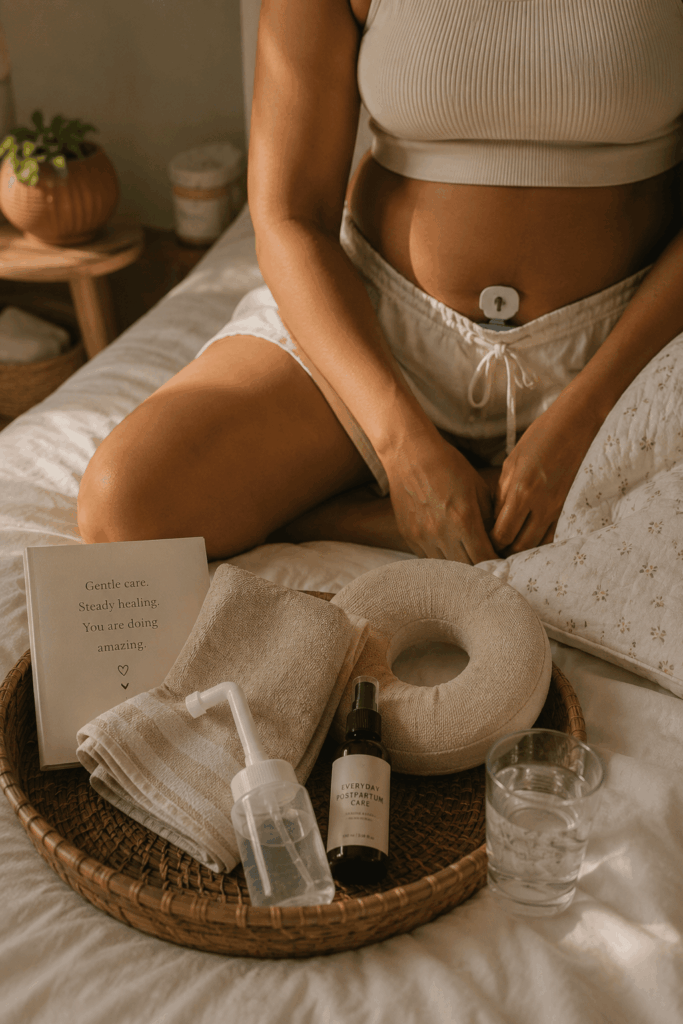
- Use a peri bottle while urinating to dilute urine and reduce stinging
- Wash your hands before touching the area
3. Try a Sitz Bath
A sitz bath can be incredibly soothing during the healing process.
To do a sitz bath:
- Sit in 8–10 cm of warm water
- Soak for 15–20 minutes
- Repeat up to three times per day if comfortable
- Gently pat dry afterward
Some women find it more comfortable to use a cool hair dryer on a low setting rather than a towel to dry the area.
4. Prioritize Rest
Healing tissues need time.
In the first few weeks postpartum:
- Avoid heavy lifting when possible
- Limit strenuous exercise
- Gradually return to activity as symptoms improve
- Listen to your body’s signals
Rest is an important part of recovery, not a sign of doing less.
5. Stay Hydrated
Drinking enough fluids supports tissue healing and overall recovery.
Aim to keep a water bottle nearby throughout the day, especially if you’re breastfeeding.
6. Eat a Fibre-Rich Diet
Constipation can increase discomfort when recovering from a perineal tear.
To support regular bowel movements:
- Include fruits and vegetables daily
- Eat whole grains and legumes
- Stay hydrated
- Consider discussing stool softeners with your healthcare provider if needed
Reducing constipation can make the recovery process much more comfortable.
When Should You Contact Your Healthcare Provider?
While discomfort is expected initially, certain symptoms should not be ignored.
Reach out to your healthcare provider if you experience:
- Severe pain
- Pain that continues to worsen
- Pain that does not improve over time
- Fever
- Signs of infection
- Concerns that the wound may be reopening
These symptoms may indicate infection or delayed healing and should be assessed promptly.
Understanding Scar Tissue After a Perineal Tear
As the body heals, scar tissue forms over the repaired area.
Scar tissue is often laid down differently than the original tissue and may sometimes create feelings of:
- Tightness
- Pulling
- Tenderness
- Discomfort with movement
This is a normal part of healing.
In some cases, scar tissue can become less mobile and contribute to ongoing discomfort. Once the area is fully healed and you’ve been cleared by your healthcare provider (often around the 6-week postpartum check-up), scar massage or pelvic health physiotherapy may be recommended.
Do not begin scar massage until you have been cleared by your healthcare provider.
The Bottom Line
Perineal tears are a common part of many vaginal births, and while recovery can be uncomfortable initially, most tears heal well with time, rest, and proper care.
Prioritize hygiene, hydration, rest, and pain management during the early weeks. If symptoms worsen or don’t improve as expected, seek medical guidance.
And remember—healing isn’t just about the stitches. Giving your body the support it needs during recovery can make a meaningful difference in how you feel in the weeks and months after birth.